I recently ventured into AI programs for data analysis and found a new visualization tool online that seems to work better than the AI data tools I have tried so far. Based on a recent conversation I had with a diversity professional in the technology field, I decided to measure the growth of Latinos in San Diego from 2012 to 2022. Based on data gathered from the U.S. Census website, it looks like the Latino population continues to grow in San Diego. The largest demographic age group appears to be 35 to 44. This group grew by 3,577 to 13,208 individuals from 2012 to 2022, while the smallest age group (above 84) grew by 1,057 to 1,113 individuals during the same years captured.
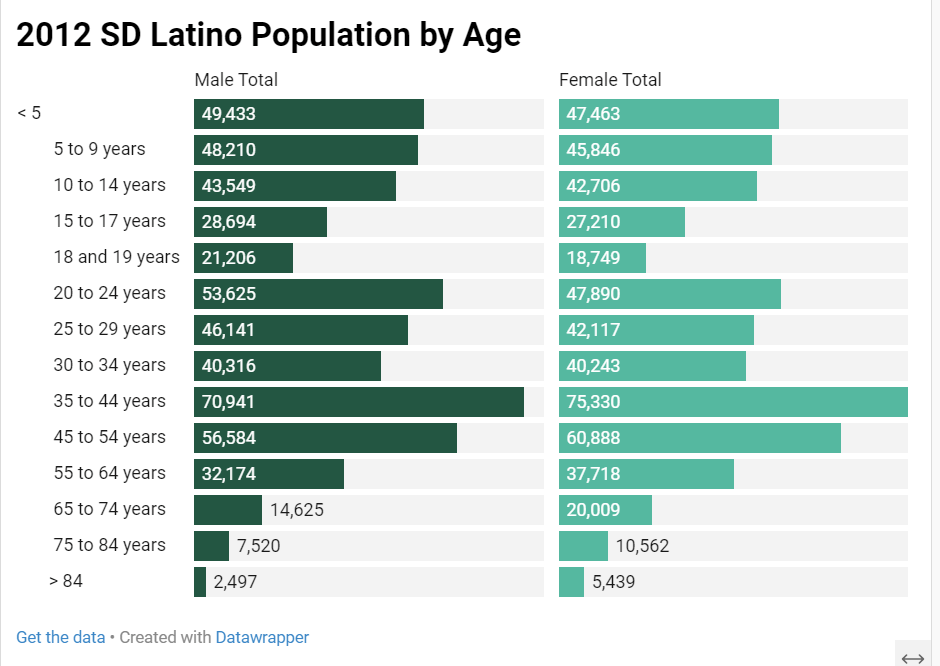
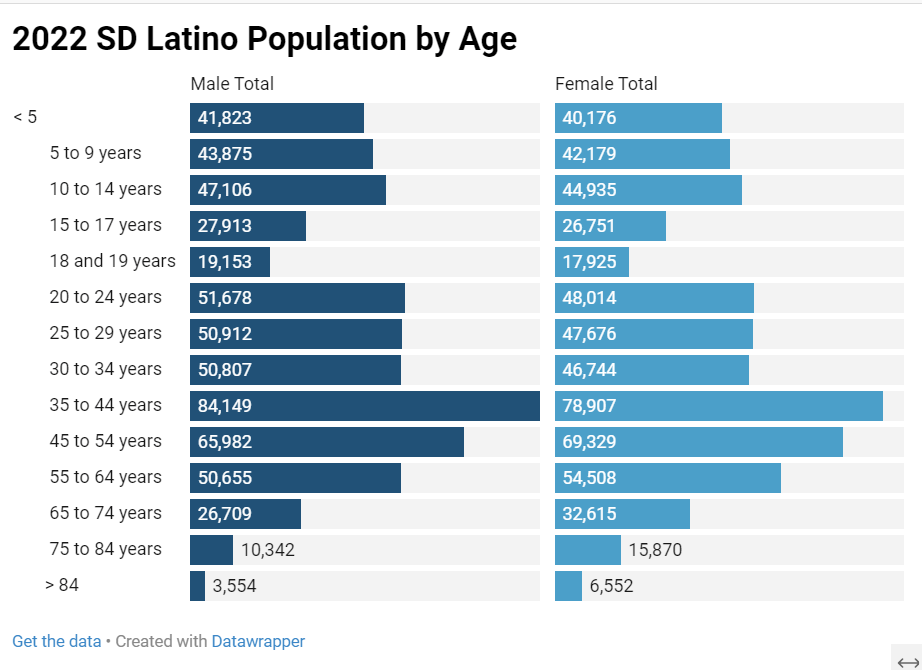
To understand how the total number of gender identities compare to one another by age, I uploaded the data into ChatGPT and following graph was generated:
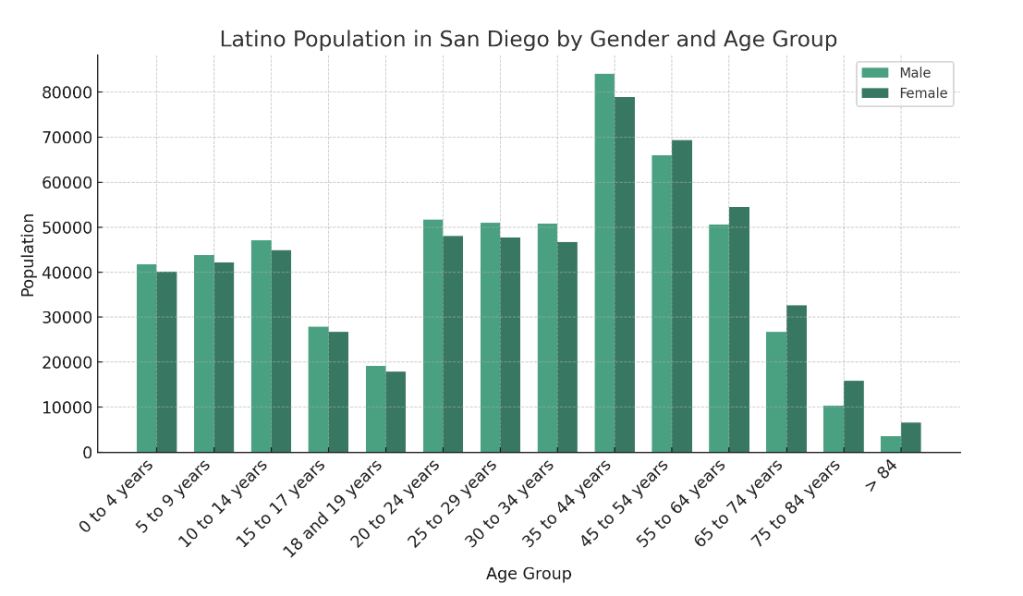
When analyzing the visual, I noted that the last age group where the presence of males was higher than females was in the 35 to 44 age group. Thereafter, the number of women towers over men which made me think, do most Latino males cease to exist after the age of 44? If so, why is this?
An online article on the Harvard Health website noted that males, on average, may take more risks than females throughout their lives which can contribute to a shorter lifespan. Males also tend to be larger in size than their female counterparts which may impact their health. Furthermore, males have higher suicide rates than females likely because it is not deemed socially acceptable to discuss mental health as compared to women who have higher rates of depression. Lastly, males may experience more developmental issues based on their formation inside the womb which makes them predisposed to a shorter life span.
The information shed some light on my question, but I was still curious to know why the majority of Latino males do not make it past 44 per the data even though Latinos, overall, tend to live longer than different ethnicities based on my online research.
Per a 2018 report released by the Center for Disease Control and Prevention, Latino males ages 45 and up are more likely to die from health conditions such as heart disease (73%) and cancer (63%) as compared to other health conditions.
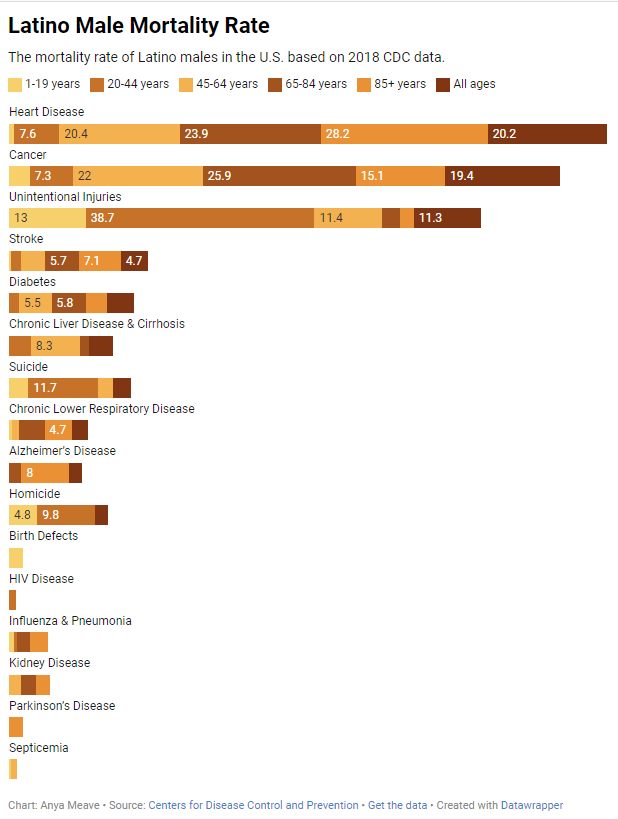
Additional health issues such as stroke, diabetes, Alzheimer’s, the flu and pneumonia, and kidney disease, although not as substantial, are also a significant cause of death for Latino males ages 45 and up. Many of the illnesses listed, including stroke, may be attributed to the type of jobs that Latinos are in which can impact their health as noted in a 2022 Pew Research article. Additionally, per a 2021 Census report, Latinos 19 and older are more likely to go without health coverage which can contribute to higher rates of mortality in older males given the lack of access to medical services.
 Anthrolatina
Leave a comment