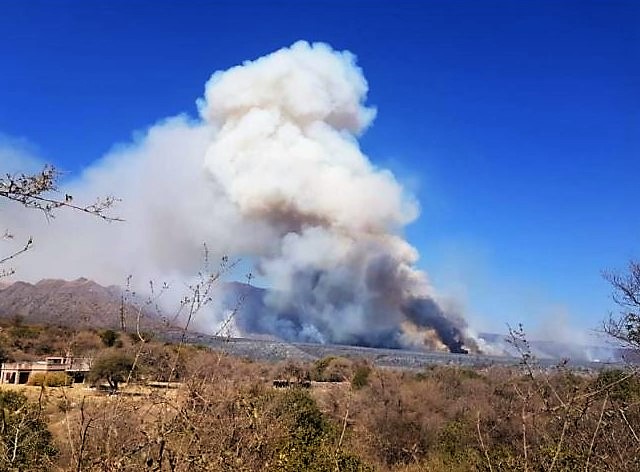
Image: “File: Incendio Cerro Negro Cordoba 2020.jpg” by Gustavo Sáez is licensed under CC BY 4.0
It seems the news in South America tends to garner little attention here in the U.S., or Northern American regions for that matter, which is counterproductive when we consider how matters of climate change are affecting the Americas. After all, Mexico, Central America, South America, and Canada also make up the Americas and what occurs in these regions will eventually affect inhabitants in the U.S., too.
The wildfires raging out of control in the Patagonia region of Argentina are no exception. Yet there has been little news, if any at all, that has been shared across media outlets in the U.S. regarding the 2,000 hectares of land have burned, 15 people who have gone missing, or 100 homes that have been lost in the fire thus far. Information regarding wildfires in California or the Amazon tend to make world news perhaps because of their political position across the globe which may lend to the growth of resources to combat the fires. However, what happens when a location does not get the attention needed to manage and combat wildfires? Who helps control flames that are consuming communities and sensitive ecosystems? Residents and volunteers, so it seems. Some being young teenagers that are seeking to save their community in hopes that their homes and nearby landscapes are still be standing after the smoke clears.
Like any disaster, wildfires place social inequities centerstage. They highlight the lack of policy implementation, government oversight, and resource allocation that is needed to help residents when disaster strikes. Implications of climate change magnify these problems, especially when residents do not have the proper knowledge and resources to combat an issue that is larger than what their community can handle.
What are the solutions? There are many, including educating residents on issues of climate change and introducing protocols that protect landscapes from intentional blazes which are a result of land clearing processes. Providing global inhabitants with the tools needed to manage disasters that are becoming stronger and more prevalent is also necessary for survival and autonomy. Lastly, halting extractivist practices that are drying out landscapes, waterways, and forests also needs to occur to prevent climate issues from multiplying.
If humans are to continue inhabiting this world with deemed success, we need to see ourselves as part of the ecosystem. Seeing ourselves outside of it will lead to our extinction.
Gracias!
Resources:
Incendio en Patagonia Argentina Deja 15 Desaparecidos y Múltiples Afectados.
 Anthrolatina