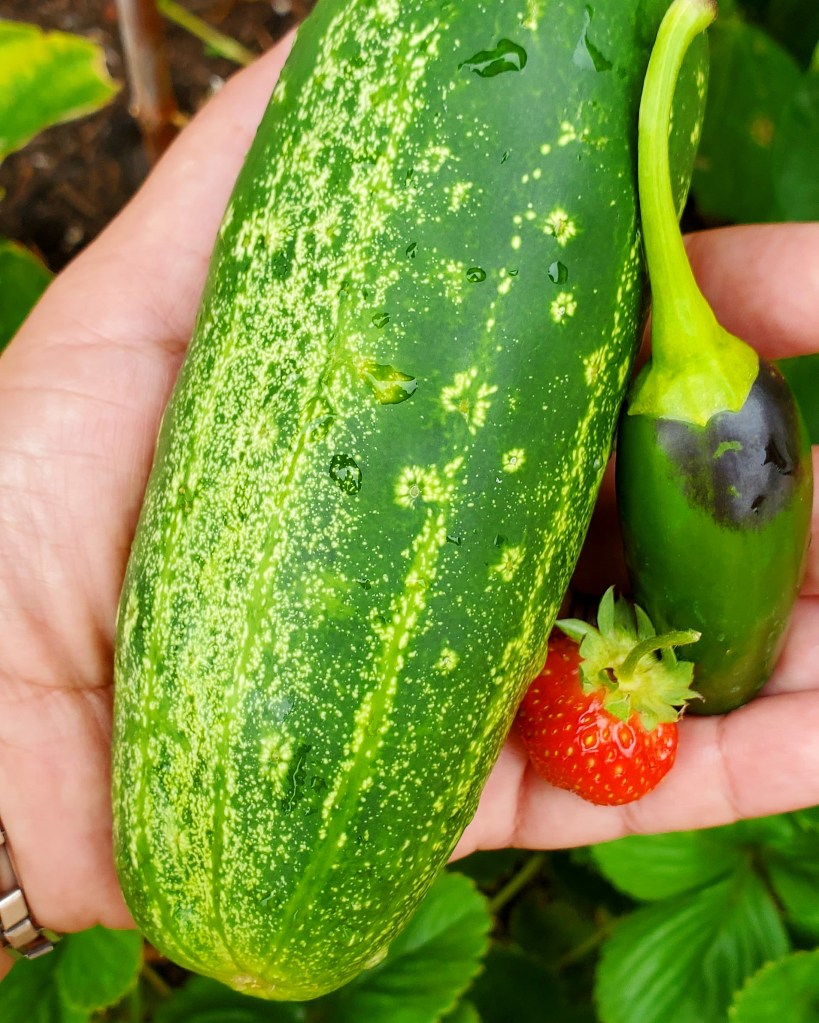
The current Coronavirus situation has served to encourage people all over the nation to try their hand at gardening, whether there is an existence of a green thumb in a person or not. The experience has moved many to share images of their results via social media, with some boasting about their modest yields of homegrown vegetables as a sort of crowning achievement. I relish in the excitement gardening brings to others as I, myself, love to grow my own goods in my urban garden even if they do not taste all that well (thanks, bitter cucumbers).
Along with the images of homegrown food, many have also included memes about the pitfalls of gardening and the challenge it is to keep any plant in their presence alive (a feeling I know all too well); including how the process of gardening is cheaper than therapy and more rewarding since you get food in the end. Still, others have used the opportunity to highlight food insecurities residents in their communities face, especially during the pandemic, as well as how gardening can be political, which got me thinking: how can gardening be political?
As a kid, I learned that a bean could grow in a bag with a wet paper towel. I don’t remember ever planting the sprouted bean, I mean, it could have rotted in the bag for all I know, but I understood the concept and still remember the process today. I also remember seeing my oldest sister grow a Pothos in a bowl of water with a fish (fascinating!) and observing how my mom grew plants from the leftover food seeds. So, after jogging my memory, I still wondered, how can gardening be political? Why would politics even enter the gardening arena? It didn’t take long before my anthropologist mind started to churn out answers.
Unfortunately, not everyone has the ability to establish their own garden. Lack of space in urban neighborhoods, costs associated with purchasing the items and tools to create a garden, and access to proper knowledge on how to grow a garden can be just some of the obstacles a person may face in the process. A reader might think, “Someone can plant a seed inside of a tin can or sandwich bag” and “the internet is full of information!! How can there be obstacles to gardening??” Well, that’s because not everyone can just go buy a bag of dirt to plant a seed or go and shovel dirt from a sidewalk in their neighborhood that is full of concrete. And the internet? Yea, not everyone has a computer or a phone with internet service that works. When we dig deeper into hurdles people face, one may realize the political issues that exist with gardening in terms of living conditions and access to information.
History also plays a large role here, of course. Human migration, whether voluntary or forced because of political strife, can disconnect a person and entire communities from a subsistence lifestyle that has existed for generations, altering a person’s diet, cultural practices and perception on food. The globalization of goods and encroachment of the western diet in regions where substance was once king is also a political issue that can affect gardening and small farming practices.
Why? Because trade deals between countries that require the import and export of certain goods across borders can radically change farming and distribution methods to accommodate an agreement that may not favor residents of a region (NAFTA comes to mind here, folks). Lastly, rules and regulations, and possibly even contracts with big agriculture companies (Big Ag) can dictate what types of crops are grown and cultivated; how they are sold and used; and what foods make it to the shelves for consumer purchase. And although this process may encourage people with the proper resources to grow their own food in their backyard, others that live in small quarters, with limited budgets and little access to gardening information are at a disadvantage. Often, marginalized groups fall in this category.
So, when looking at the very fine picture (the big picture seems to blurry) one can see that yes, gardening is very political and that is a problem! But how can politics be removed from gardening? What are the steps a person can take to free what should be a human right? First, change starts within oneself. Identifying your own current situation and your perspective is a must. Then, look to see if others have experienced the same issue and reach out to them. The problem could be bigger than you thought. Next, if you have the resources available, conduct research on the topic or similar issues to figure out a solution. Don’t have access to the information you need? Consider reaching out to an organization in your community that address social and environmental injustices and share your concerns with them. You may even be able to work with them to help solve the problem!
The suggestions I offer here are just a start, and they are by no means a complete solution to depoliticizing gardening, or any other environmental and social issue being faced. However, the to make change you have to start somewhere and assessing your needs and the needs of your community is an important step to take. After all, one person may not be able to make change in the world, but the work of many can yield fruitful results.
If you would like to learn more about the politics of gardening, click on the text below:
Los Angeles Community Garden Council – Food Justice: What it Means and Why it Matters
How Urban Agriculture Can Improve Food Security
Guerrilla Gardening: A Way to Oppose NAFTA
Gracias!
 Anthrolatina