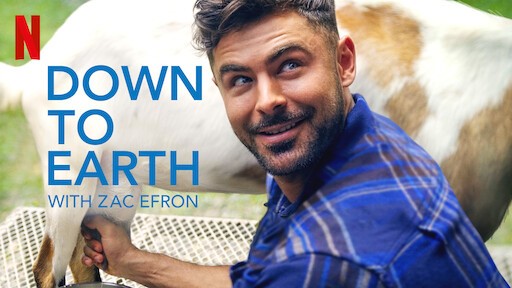
A few days ago, my family sat down to watch the new environmental series, Down to Earth with Zac Efron (Netflix 2020). It seems to be all the rage and meant for environmental nerds like me; or possibly big Zac Efron fans (anyone want to re-live a High School Musical moment?). I would imagine Darin Olien, the co-host, also has some pull since he’s well known for his Shakeology products and his hunt for superfoods. Either way, I think the two make a nice pair; sort of like the way a teacher and student would in a story.
The series, from what I have seen so far, is a great way to introduce and expand the audience’s knowledge on different sustainable practices from around the world. If someone is new to learning about environmental issues, this show makes the topic easier to digest and embrace. However, if you are someone with a little more knowledge, this show may seem too soft and in need of more extreme information on why the planet is facing a climate crises. I am sure some humans would like to deny their involvement in the process (insert climate skeptics and deniers here), but the rest of us know what we’re doing and this show helps to make it more evident to the general public in a nice way.
The first episode highlights the benefits of geothermal activity as an energy solution, while the second episode focuses on the importance and benefits of water inspiring me to go and buy a different types of bottled (glass) water and taste each one. You heard right — taste each one. Which water is the best to drink? (spoiler alert…never mind. Watch the show). The third episode focuses on food and Costa Rica. This episode had me squirming a bit in my seat. Not because I am antsy or I really want to visit Costa Rica (because, well, I do), but because of the lack of native residents and local practices I saw throughout the episode. Although it was great to see communities focused on sustainability and ecological balance, I could not help but pick apart the episode.
As an anthropologist, the absence of native residents and practices in the episode brought up a lot of questions in my mind. Were indigenous groups driven from their land where the village sits to accommodate newcomers? Why is there a private village in the middle of forested land? Shouldn’t native residents have access to the village and services offered? How do these sustainable villages benefit local residents? And lastly, among other questions I had, how did these newcomers, expats, village residents (whichever name is preferred) learn about the landscape and local nuances? By books and pictures? I doubt it, like, a lot!
The reality is the residents of the village could not become familiar with the forest and how to cultivate the land without the traditional ecological knowledge (TEK) that native groups bring. Somehow this seemed to be missed in the episode which was bothersome to me. Why is TEK so important? Because it is information that has been shared from generation to generation, often orally, about ecological surroundings that are crucial to the survival of a group and the biodiversity of a region. It is literally a treasure chest of information that indigenous groups should be celebrated for; but outsiders alter, dismiss, or take credit for as seen in this episode.
Now, someone reading this (if anyone at all) may think, “well, it’s a show and you can only fit so much!” Yes, I know. I studied media and production (like soooo many others). A 30-minute TV show without commercials is really about 22 minutes long. The commercials fill-in the rest of the time. However, when it comes to production, there is a script (always a script) to follow that highlights the important aspects of the show and highlighting TEK should have made the cut in this episode! Even if for a few moments to give credit where credit is due. I mean, I would have been more interested if the whole episode was about TEK; but I am an anthropologist that studies human-ecological connections. So, yea.
I have yet to see future episodes past the fourth one which is about a Blue Zone in Sardinia where residents live well into the 100’s. Why is it called a Blue Zone? (again, watch the episode). However, I look forward to seeing what new adventures and stories of sustainability Zac and Darin will have. Hopefully, I will not have much to pick apart on the episodes next time. Anyway, check out the show!!
Interested in learning more about traditional ecological knowledge? Click on the text below:
Western Science is Finally Catching Up to Traditional Ecological Knowledge
Traditional Ecological Knowledge
Gracias!
 Anthrolatina
Leave a comment